
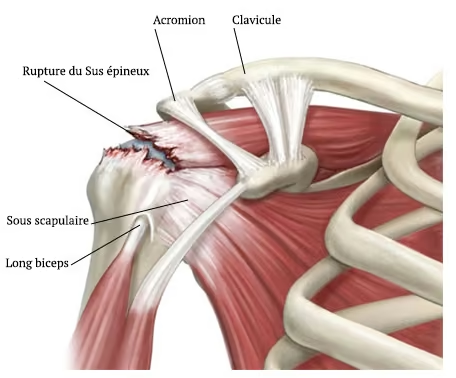
Definition: A rotator cuff is a group of 4 muscles responsible for the shoulder’s stability and mobility (infraspinatus, supraspinatus, teres minor, and subscapularis). When there is a tear, one or several of the tendons in this group are injured. This can be due to trauma (fall, accident) or tendon wear. Although this pathology mostly affects people aged 45 years and older, younger individuals may also be affected, usually following trauma.
Non-surgical treatment: Physiotherapy is possible and is successful in most cases, especially for partial tears. Although it will not repair the tear, physiotherapy will lessen the pain and improve or maintain muscle strength in the rest of your shoulder muscles. Aquatic physiotherapy may also improve this type of pathology.
Corticosteroid injections may also be considered, but only with the approval of your attending physician. Indeed, too many corticosteroid injections can expand the tear.
Other alternative treatments can be considered, such as acupuncture or osteopathy. These options can help control and/or alleviate your pain without repairing the tear.
Surgical treatment: If physiotherapy is not successful after 3-6 months, surgery may be proposed, especially for complete tears. Usually, this is an arthroscopic procedure, meaning that three little incisions in the front and in the back of the shoulder are used to perform surgery.
In more complex cases, a tendon transfer may be needed, or a complete shoulder joint replacement with a prosthesis.
1- Janvier 2019 – Instructeure lors de la session ‘’Arthroscopic Bankart-Rotator Cuff’’ au Shoulder and Elbow Course à Calgary
2- Bureau NJ, Deslauriers M, Lepage-Saucier M, Rouleau DM, Roy A, Tétreault P, Hagemeister N. Rotator Cuff Tear Morphologic Parameters at Magnetic Resonance Imaging: Relationship With Muscle Atrophy and Fatty Infiltration and Patient-Reported Function and Health-Related Quality of Life. J Comput Assist Tomogr. 2018 Apr. doi: 10.1097/RCT.0000000000000740.
3- Hinse S, Ménard J, Rouleau DM, Canet F, Beauchamps M. Biomechanical study comparing 3 fixation methods for rotator cuff massive tear: Transosseous No.2 suture, transosseous braided-tape, and double-row. J Orthop Sci. 2016 Nov; 21(6) :732-738. Doi : 10.1016/j.jos.2016.07-001. PMID: 27633461
Definition: Shoulder dislocation occurs when the humerus and the glenoid of the shoulder are not in contact anymore. In most cases, dislocation results from trauma or a contact sports injury (basketball, football, rugby, etc.). This pathology is mostly found in the younger population (18-). If there is no physiotherapy treatment after the initial dislocation, the risk of it happening again is high. This is called a recurrent dislocation. These can happen during the most common daily activities, even while sleeping.
Non-surgical treatment: When the first dislocation occurs, physiotherapy must begin. This treatment will aim to increase your shoulder strength and assess your proprioception (brain capacity to understand where a joint is during movement).
A follow-up appointment with a kinesiologist is possible if you play contact sports.
Surgical treatment: When dislocation becomes recurrent, it can be treated surgically. Several surgeries are possible, depending on your shoulder’s condition, physical activity level, etc. Dr. Rouleau will discuss the various options with you, either an arthroscopic surgery (Bankart) or open surgery with a bone graft (Latarjet).
1- Janvier 2019 – Instructeure lors de la session ‘’Arthroscopic Bankart’’ au Shoulder and Elbow Course à Calgary
2- Avril 2020 – Atelier examen physique : section laxité/instabilité lors de la journée de l’épaule à la fédération des médecins omnipraticiens du Québec (FMOQ)
3- Rouleau DM, Bedard R, Canet F, Petit Y; Canadian Shoulder and Elbow Society. Teaching simulated arthroscopic Bankart repair: residents’ assessment at the Annual Shoulder Course. Can J Surg. 2019 Aug 1;62(4):227-234.
4- Delage Royle A, Balg F, Bouliane MJ, Canet-Silvestri F, Garant-Saine L, Sheps DM, Lapner P, Rouleau DM. Indication for Computed Tomography Scan in Shoulder Instability: Sensitivity and Specificity of Standard Radiographs to Predict Bone Defects After Traumatic Anterior Glenohumeral Instability. Orthop J Sports Med. 2017 Oct 30;5(10):2325967117733660. doi: 10.1177/2325967117733660. eCollection 2017 Oct. PMID: 29119123
5- Delage Royle A, Balg F, Bouliane MJ, Canet-Silvestri F, Garant-Saine L, Sheps DM, Lapner P, Rouleau DM. Indication for Computed Tomography Scan in Shoulder Instability: Sensitivity and Specificity of Standard Radiographs to Predict Bone Defects After Traumatic Anterior Glenohumeral Instability. Orthop J Sports Med. 2017 Oct 30;5(10):2325967117733660. doi: 10.1177/2325967117733660. eCollection 2017 Oct. PMID: 29119123
Definition: Osteoarthritis is part of the normal joint degenerative process. As we age, our joints and the little cushions (cartilage) that prevent the bones from touching one another become increasingly worn down, and they can even sometimes disappear.
Sporadic pain then sets in, which increases as time goes by. Gradually, the shoulder’s range of motion decreases and becomes very painful. Shoulder osteoarthritis is a very debilitating condition in terms of function. People affected by it complain of being unable to perform their daily activities.
Non-surgical treatment: Unfortunately, there is no cure for osteoarthritis. However, a corticosteroid injection into the shoulder can alleviate pain. The first step is a corticosteroid injection; when that does not work anymore, a visco-supplementation injection can be considered.
Physiotherapy, acupuncture, or osteopathy treatments can also help alleviate pain.
Surgical treatment: Shoulder joint replacement surgery can be considered when osteoarthritis becomes too debilitating. Dr. Rouleau can offer you two types of shoulder prostheses: an anatomic prosthesis or an inverse-reverse prosthesis. This choice will be based on your age, level of physical activity, and shoulder condition.
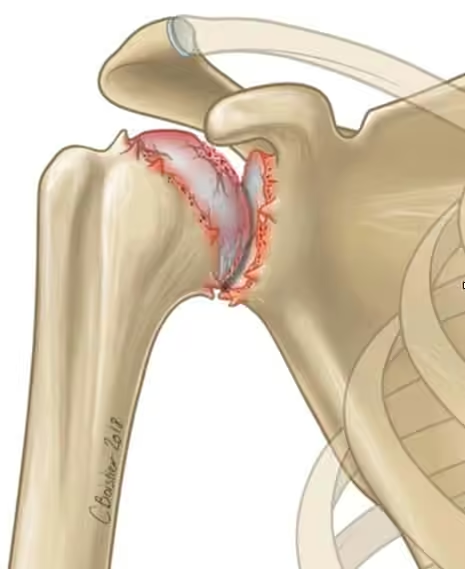
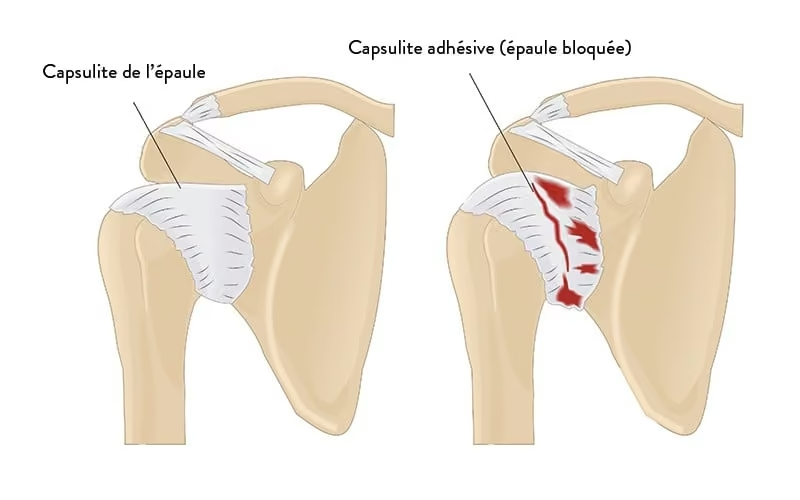
Definition: Capsulitis occurs when the capsule, the shoulder joint’s membrane, thickens over time. This will cause pain, and the shoulder’s range of motion will gradually decrease. There may be several causes for the onset of capsulitis, such as trauma, prolonged immobilization, and other underlying pathologies (tendinitis, bursitis).
This pathology is very painful and impairs function since the shoulder may lose most of its range of motion.
Non-surgical treatment: Physiotherapy is the most common treatment for this pathology.
Arthrographic distension is also widely used. This is a procedure where fluid is injected into the shoulder joint by a radiologist aiming to loosen the capsule. Standard treatment usually includes two injections, but a third one may be done if necessary. It is essential to combine physiotherapy with arthrographic distension.
In combination with physiotherapy, acupuncture may also relieve the pressure points in the shoulder.
Non-steroidal anti-inflammatory drugs can also be prescribed.
Surgical treatment: Although very rarely used, capsule release can be considered in extreme cases. This is an arthroscopic procedure, meaning that it is performed through small holes in the shoulder.
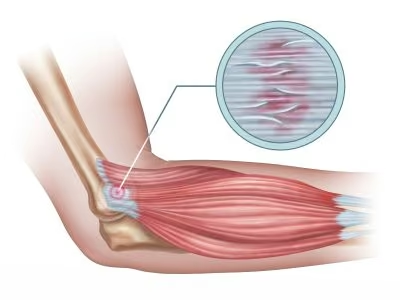
Definition: epicondylitis is an inflammation of the tendons responsible for wrist extension and situated at elbow level. It is usually caused by repetitive movements but may also be caused by a poorly adapted workstation or trauma. In some cases, a neck problem may lead to pain similar to epicondylitis.
Non-surgical treatment: Physiotherapy and ergotherapy are the most common treatment options for this type of pathology and can deal with this problem adequately. In conjunction with physiotherapy, acupuncture, osteopathy, and massage therapy may be considered.
An assessment of the workstation by an ergonomist is another potential solution. This pathology is often found in people working mostly on their computers. Several tools are available to improve the ergonomics of the workstation. Talk about it with your employer.
Your surgeon can also prescribe anti-inflammatory drugs, to be taken either as an oral or topical medication.
Your attending physician can also perform corticosteroid injections at the elbow level, which may be detrimental to your condition.
Finally, an elbow brace may be prescribed to relieve the tension in the elbow’s muscles. This brace does not treat the pathology but helps with pain management.
Surgical treatment: If non-surgical treatment fails, surgical options can be discussed. The surgery involves a small incision at the elbow level to release the affected muscles.
Synonym: Shoulder Separation
Definition: The acromioclavicular joint forms the junction between the scapula and the shoulder. Following a direct impact to the shoulder, for example, a tackle while playing hockey, the ligaments that hold the joint together are either stretched or torn. A complete tear will manifest as a deformity at the front of the shoulder, called the piano key sign.
This joint may also be affected by acromioclavicular arthritis. This pathology can be secondary to the infamous dislocation mentioned above but also caused by overuse in athletes playing contact sports (boxing, judo) or in manual workers. This will lead to more or less focalized pain and painful joint motion.
Non-surgical treatment: Rest and a brief arm immobilization are indicated when the ligaments are stretched or for a partial tear. A physiotherapist can tape the shoulder to alleviate pain. Physiotherapy treatments can be prescribed to improve shoulder range of motion and muscle strength.
Your attending physician can recommend a corticosteroid injection.
Surgical treatment: If conservative treatment fails, surgery is a possibility. This arthroscopic procedure removes part of the collarbone, the part closest to the shoulder.
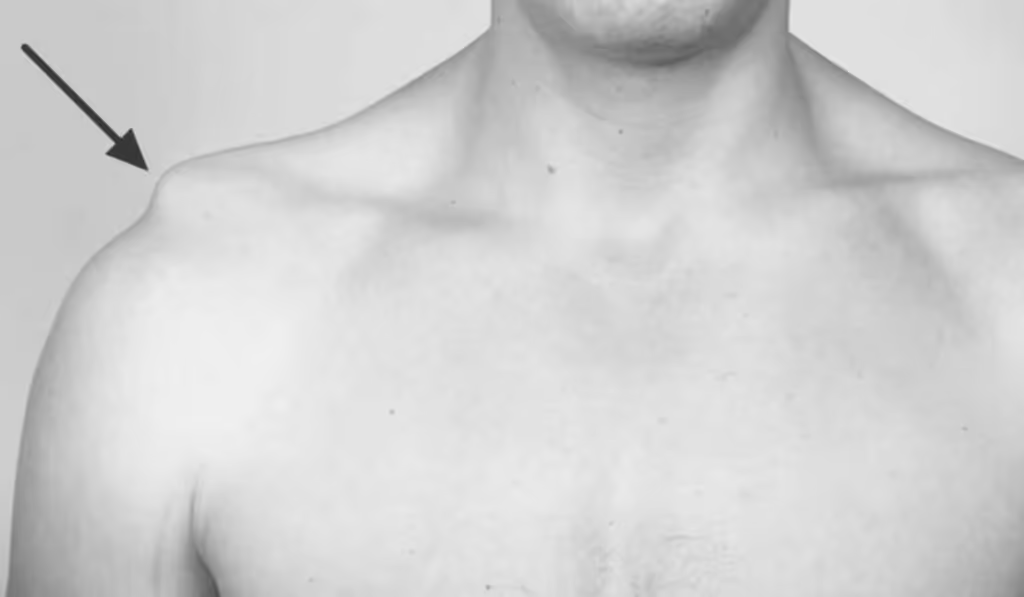
1- Canadian Orthopaedic Trauma Society. Multicenter Randomized Clinical Trial of Nonoperative Versus Operative Treatment of Acute Acromio-Clavicular Joint Dislocation. J Orthop Trauma. 2015 Nov; 29(11):479-87. doi: 10.1097/BOT.0000000000000437. PMID: 26489055.
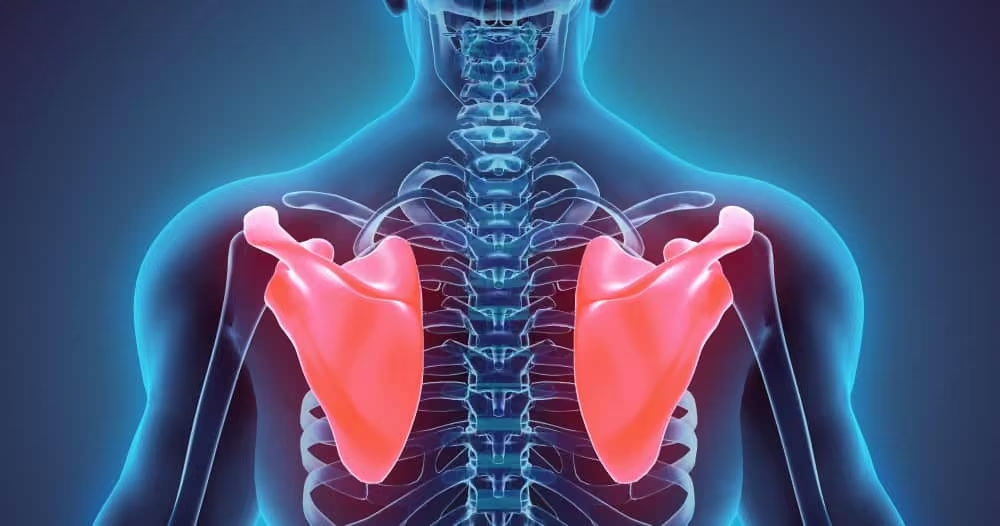
Definition: First, it should be noted that scapular dyskinesis is a pathology that is still poorly understood. It consists of the dysfunction of the muscles around the scapula. This dysfunction can be caused by a neurological problem, muscle weakness, or shoulder instability. When someone has this pathology, the scapular motion of the injured shoulder is not the same as that of the healthy shoulder in arm elevation. Dyskinesis is often associated with pain and a reduced range of motion.
Non-surgical treatment: When scapular dyskinesis is diagnosed, an intense, supervised exercise program must begin. This treatment plan involves strengthening the muscles surrounding the shoulder, correcting posture, and doing mobility exercises.
Surgical treatment: When conservative treatment fails, several types of surgeries are possible.
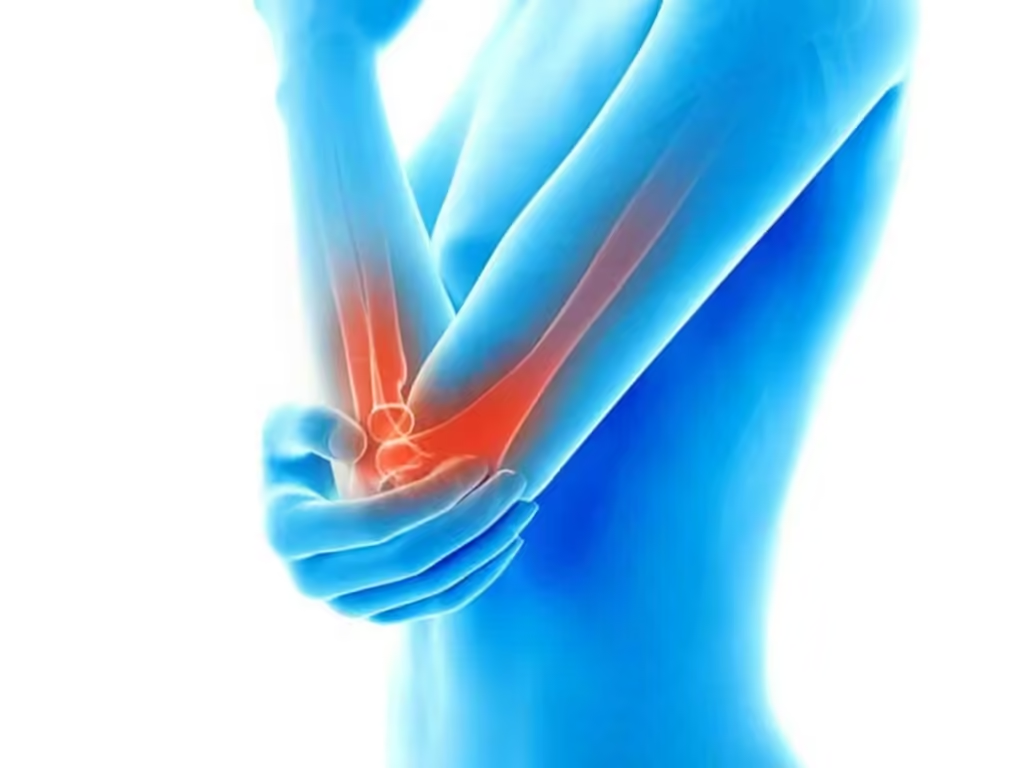
Definition: Elbow dislocation can occur when someone falls directly on their elbow or hand. Usually, at the time of dislocation, there are also ligament tears that make the joint unstable. Then, patients complain about elbow pain, feelings of instability, and limitations in their sports activities. This problem mainly affects young athletes.
Non-surgical treatment: Following elbow dislocation, immobilization is needed for a few weeks. Then, physiotherapy can begin to regain elbow mobility and strength.
When there are ligament tears, conservative treatment cannot repair the tear. Physiotherapy can help alleviate pain or inflammation. Be careful during elbow manipulations. Once the ligaments are torn, the joint becomes very unstable.
Surgical treatment: Ligament reconstruction is possible. This procedure requires wearing a splint after surgery according to a strict protocol. It is essential to discuss the postoperative treatment in detail with Dr. Rouleau.
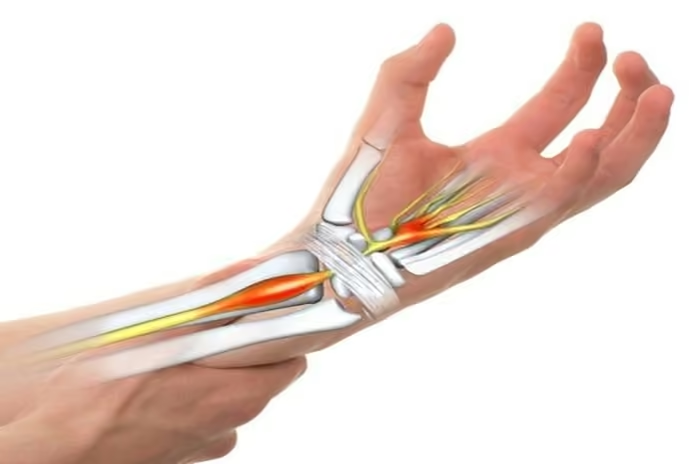
Definition: Carpal tunnel syndrome is pretty common and can affect both wrists simultaneously. It occurs when the nerves are compressed as they travel through the wrist. Carpal tunnel syndrome can have many causes: bad posture while working, cervical problems, pregnancy, and bad sleeping position are among the most common risk factors. People with carpal tunnel syndrome will feel tingling in their hands and lose grip strength. Pain during the night is also very common with this pathology.
Non-surgical treatment: A wrist orthosis can be prescribed by your physician. It will immobilize your wrist and improve symptoms caused by nerve compression. Anti-inflammatory medication or corticosteroid injections can be considered.
Physiotherapy can help, as well as osteopathy and acupuncture.
Assessing your workstation may also be beneficial. Call upon an ergonomist to identify and solve any issues.
Surgical treatment: When conservative treatment is not enough, surgery under regional anesthesia is possible. This consists of a minor surgery aiming to release the ligament.
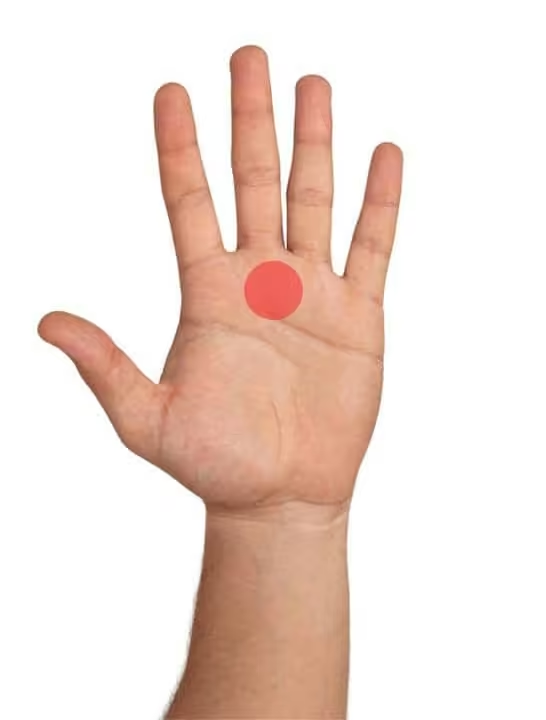
Definition: Trigger finger is characterized by the bent position of the finger, which remains blocked. It is necessary to use the other hand to straighten it. The patient will initially feel pain in the palm, and the pathology evolves until the finger remains blocked.
Non-surgical treatment: for milder cases, using anti-inflammatory medication, an orthosis, and corticosteroid injections may solve the problem.
Surgical treatment: Under regional anesthesia, the surgeon will transect the ligament causing the trigger finger using an arthroscopic procedure.
 WE VALUE YOUR PRIVACY
This website uses first- and third-party cookies to better understand your preferences, optimize our website and services, improve the user experience, personalize content and advertisements, and provide social media and other third-party features. Not consenting or withdrawing consent may negatively affect certain features and functions.